
This reflective essay examines why Nepal’s climate policy and governance frameworks are failing mountain communities in high-altitude districts, drawing on fieldwork across thirty villages in Humla and Mugu.
The View from the Mountains
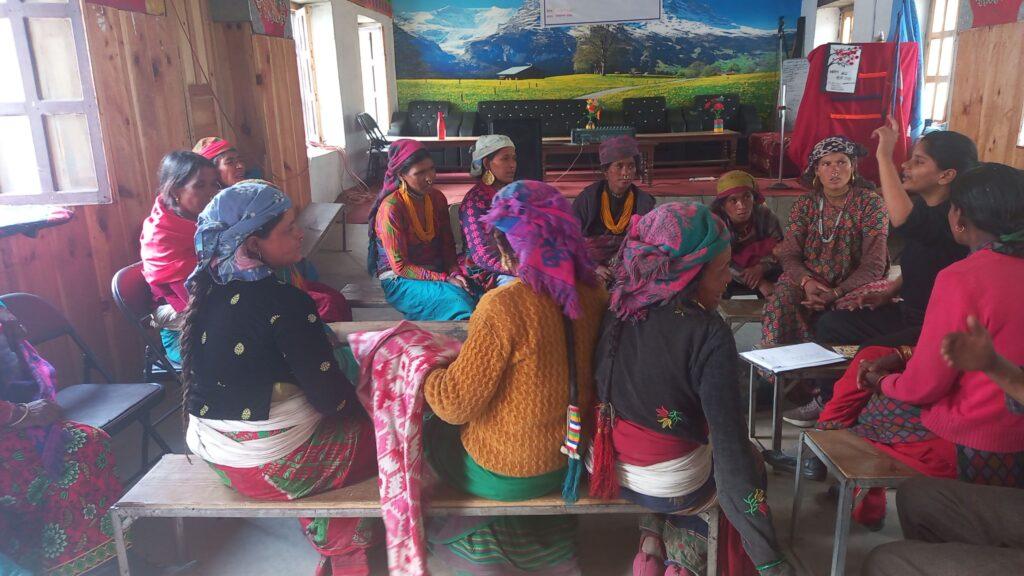
When I moved to the Himalayan region of Nepal shortly after finishing my undergraduate studies in 2021, I carried a naive romanticised idea of a simple mountain life. Surrounded by those majestic mountains and warm people, I also saw the myriad of challenges they face. Across the communities where I worked with Himalayan Education and Development (HEAD) Nepal, I saw firsthand how rapidly climate change was threatening life in these mountains. Springs were drying up, more frequent floods and landslides, rainfall was erratic, and pests were destroying traditional crops that farmers had grown for generations.
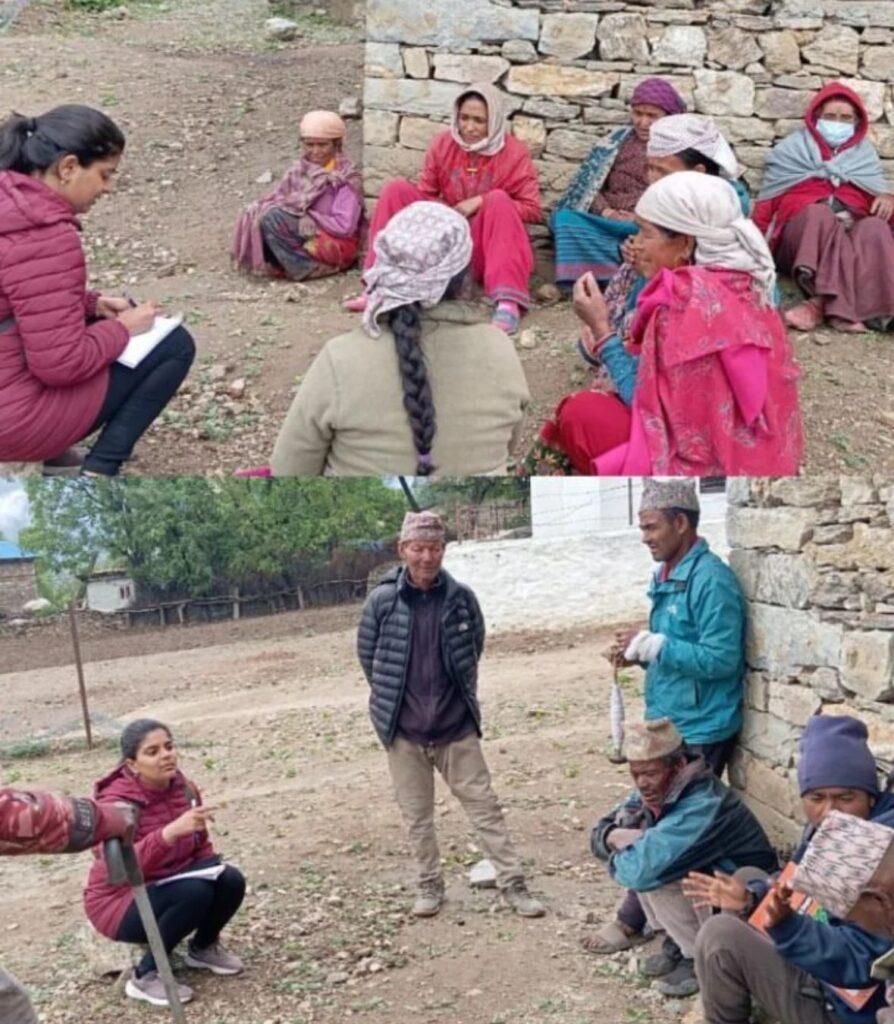
Leading a climate impact research in 2024 took me to over 30 villages in Humla and Mugu districts, the remotest parts of Nepal. Agriculture stood out as the most affected area. Farmers repeatedly described losing their traditional crops like barley (kodo) and maize (makkai) to unpredictable weather and new infestations. One farmer, Pema Sangpo Lama, took me to her field and showed me her crops riddled with insects she had never seen before. “Even the soil feels different,” she said quietly. Both of us stood there for a while feeling utterly helpless.
These remote Himalayan districts had no road or market access, and most households practised subsistence farming, so when crops failed, families had no backup options and were trapped in a cycle of scarcity. Watching this unfold, I could not ignore how the global climate crisis has created deeply unequal burdens; those least responsible for causing it are the ones facing its most devastating consequences.
The Cracks in the System
At first glance, Nepal’s climate policies looked incredibly promising. The National Climate Change Policy (2019) and the Agriculture Development Strategy (2015 to 2035) recognised that climate change was threatening food security and rural livelihoods and promised climate-resilient agriculture, local adaptation, and decentralised planning. They imagined local governments leading through climate-smart seeds, early-warning systems, and extension services, all guided by the Local Adaptation Plans of Action (LAPA) that were supposed to translate national goals into local programmes.
But once I began engaging with the local governments and communities in Humla and Mugu, it became clear that none of this was unfolding as intended. Agriculture, environment, and local governance departments worked in silos, and most rural municipalities had no agricultural officers. By design, LAPA was meant to help mountain municipalities map climate risks and embed concrete, climate-resilient agriculture actions into their annual plans; in practice, the farmers I worked with had neither heard of these plans nor seen any of the promised support reach their fields. They were already battling collapsing crop yields, and when crops failed, there was no access to climate-smart seeds, training, or timely advice, and most people did not even know whom to turn to for help.
One LAPA officer in Humla sheepishly admitted that recent adaptation funds were used to create flood barricades, which, in his words, were “simple, visible, and hassle-free.” A classic case of climate action by convenience!
Earlier, I assumed weak outcomes meant weak leadership. It’s easy to blame things on the government in a country like Nepal, where the government has religiously and continuously failed its people. But the more time I spent inside the government, the more I saw that delivery fails when authority, incentives, and clarity don’t align, not because people don’t care.
The deeper problem is that the current climate policy design never clearly outlines how implementation or monitoring will work. Monitoring requirements exist on paper, but in practice, there is no follow-up, no learning loop, and no pressure on local governments to prioritise climate adaptation
Policies written in Kathmandu often met international expectations but were not anchored in the harsh mountain realities where climate impacts hit hardest and limited local capacity makes implementation far more difficult.
Nepal’s decentralised climate framework was meant to empower local governments, with up to 80 % of climate finance earmarked for local use. But seeing them in practice forced me to confront why gaps persist despite good intentions. Federalism is still young, and decentralisation has handed responsibility to local governments without devolving the expertise, authority, or accountability needed to act.
Astoundingly, nearly half of the national climate budget went unspent in 2024, and several projects released only small portions of their funds due to weak planning, limited capacity, and administrative delays. Across the country, the pattern is clear: Nepal is not struggling to access climate finance, it is struggling to use it where vulnerability is highest.
My experiences working in Humla changed how I understood both climate vulnerability and governance. I went in believing that urgent needs could be met with targeted support, but I left realising that no program can replace a system that is able to act. What looked like local inaction was usually the result of unclear mandates, missing staff, frozen funding, and a new federal structure that hasn’t fully settled. Farmers in Humla and Mugu weren’t failed by a lack of policy; they were failed by the absence of a delivery system that could carry those policies to them.
What must change
These experiences reshaped my understanding of good public policy, which must do more than announce ambition. It sets a realistic goal, understands what capacity and coordination are required to deliver it, builds in simple checks to track progress, and most importantly, reaches the last mile so the impact is felt by people like the farmers I met in Humla and Mugu.
Climate adaptation in the mountains depends on getting the basics right: clear roles, simple processes, strong local teams, and a balance of authority and accountability. It requires a state able to act and learn in difficult, resource-constrained settings.
The first step is clarity. Climate roles must be simple enough that rural municipalities know exactly what they are responsible for. Without clear mandates, even the most committed officers are left guessing, and guessing is expensive in places where one failed crop season can push families into hunger. But clarity means little without capacity. Every municipality needs at least one trained agricultural extension officer who understands climate-resilient farming, however staffing in high-altitude places like Humla and Mugu remains extremely difficult.
One solution that stands out in resourced-starved, mountainous districts is a true partnership with NGOs. Rather than seeing NGOs as just gap-fillers, policy needs to actively draw on their expertise, expansive networks and make way for collaboration. Governments should build joint implementation teams with trusted partners, letting them lead on last-mile delivery, mobilising resources and adapting solutions to the realities of high-altitude isolation. I’ve seen firsthand in my time with HEAD Nepal how much faster and deeper impact can be when government and NGOs work side by side, rather than in parallel.
A more workable path, I’ve come to realise, is to link a portion of climate funding to a few clear, mountain-relevant outcome indicators rather than the complex planning processes most rural municipalities struggle with. In low-capacity districts like Humla and Mugu, full autonomy without guidance often leaves funds frozen because no one is sure what to prioritise. Simple monitoring indicators such as the number of farmers receiving climate-resilient seeds, villages securing reliable water, or communities accessing timely pest-management support would give districts a shared direction while still keeping decentralisation flexible. Part of the funding can remain discretionary so municipalities can respond to local realities, while monthly reviews and basic dashboards help track progress without adding paperwork.
These monthly reviews should prioritise learning rather than fault-finding, giving municipalities space to surface what worked, where they are stuck, and what support they need. This rhythm of feedback preserves both intent and accountability, adds just enough scaffolding for real delivery, and helps ensure climate finance finally reaches the mountain farmers living closest to the crisis.
As I conclude this essay, I recognise that the solutions I now believe in are simple, almost ordinary: clarity in roles, a capable team that exists where the vulnerability is, meaningful partnerships with NGOs when the state cannot reach, a few shared outcomes, and a system to help everyone learn and improve. None of this is glamorous, but it can determine whether a farmer receives climate-resilient seeds on time or a family goes hungry.